Saccadic Suppression of Retinotopically Localized Blood Oxygen Level-D…
페이지 정보
작성자 Nola Fairfield 작성일 25-11-30 02:19 조회 12 댓글 0본문
 Vision is an active course of involving a close interplay between sensory and oculomotor management techniques within the mind. V4 (Kleiser et al., 2004). These authors concluded that saccadic suppression occurs at greater motion-delicate areas and found no significant evidence of saccadic suppression in areas V1 and V2. Thilo et al. (2004) reported that saccades impair the notion of phosphenes elicited on the retinal stage but not of these elicited by transcranial magnetic stimulation over the occipital cortex, suggesting that retinal signals have to be suppressed earlier than arriving on the visible cortex. Suppression at an early stage of visible processing is also supported by fMRI work from Sylvester et al. 2005) by which they demonstrate that sequences of saccades throughout ganzfeld visual stimulation modulate exercise in human lateral geniculate nucleus (LGN), V1, and V2. Well established psychophysical analysis has shown that saccadic suppression provokes a transient and short-lived decrease in visual sensitivity that begins ∼75 ms before the onset of the particular eye motion and is maximal at motion onset (Latour, 1962; Zuber and Stark, 1966; Volkmann et al., 1968; Riggs et al., 1982; Diamond et al., 2000). The notion of stimuli presented very briefly during this presaccadic interval is impaired although they are projected onto a stationary retina, and subsequently their retinal pictures are identical to those projected by the identical stimuli when no saccadic programming is in course. On this study, we measured blood oxygen degree-dependent (Bold) (Ogawa et al., 1990) responses to four retinotopically localized low-spatial-frequency Gabor stimuli flashed immediately before the onset of a horizontal eye motion to a visual target: the exact second during which each retinas are still stationary, the encoding location of the stimuli in V1 is understood, and saccadic suppression is thought to be maximal. If saccadic suppression modulates alerts in major visual cortex, we might count on Bold responses elicited by these stimuli to be affected by the temporal proximity to the saccadic onset, the identical method performance drops in detection and discrimination tasks.
The Apple Watch Series 6 feels prefer it has perfected most of the features I favored about its predecessor. It has a brighter all the time-on show, a extra highly effective processor, sooner charging and two new colorful options to select from. However the characteristic I used to be most excited to try out was its new sensor that measures oxygen saturation in the blood (aka SpO2) with the faucet of a display screen. As someone who panic-bought a pulse oximeter at the start of the coronavirus pandemic and nonetheless checks her ranges at the primary signal of a cough, the thought of getting one strapped to my wrist at all times was sufficient to pique my curiosity. But unlike the ECG characteristic on the Apple Watch, which has been tried, tested and cleared by the US Food and Drug Administration, together with the irregular coronary heart rhythm notifications, SpO2 on the Apple Watch still appears to be in its early levels. Navigating all this new knowledge could be daunting for anybody who's not a medical professional.
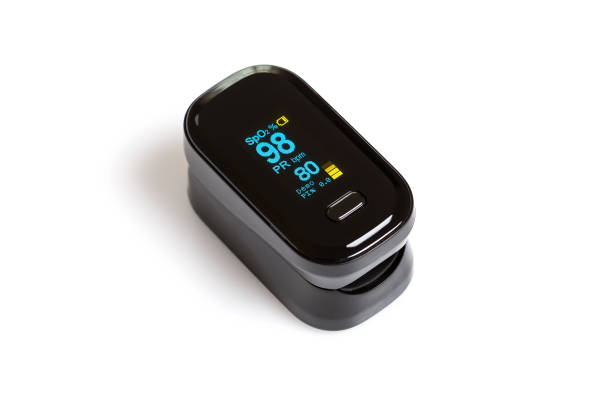
I bought an FDA-cleared pulse oximeter, the gadget doctors use to measure SpO2 in your fingertip, as a precaution when coronavirus circumstances in the US started to climb. Having low blood oxygen ranges would not assure you might have COVID-19, but it's certainly one of the foremost signs of the disease. I had read horror tales of people who waited too lengthy to go to the hospital and had died of their sleep as a result of they didn't understand their levels had dipped in a single day. You should at all times check with a physician in case you are experiencing shortness of breath (one other symptom of COVID-19), even when a pulse oximeter says you are in a healthy vary, but I found comfort in realizing that I might not less than use it as a reference if I ever experienced shortness of breath. That's not something you are able to do with the Apple Watch -- Apple says it ought to be used for wellness purposes only and never as a medical BloodVitals device, which means you may should take the results with a grain of salt and shouldn't use it to display screen for any kind of illness, which is what I had been hoping to get out of it.
But there could also be different advantages of getting it strapped in your wrist always. Very similar to a pulse oximeter, the Series 6 makes use of purple and BloodVitals device infrared mild from its new sensor to determine the proportion of oxygen in the blood. But as a substitute of shining the light by your fingertip, it makes use of the sunshine that is reflected back from the blood vessels in your wrist to determine your oxygen ranges primarily based on the coloration of your blood. During the setup process you're requested whether or not you need to activate SpO2 monitoring, which I did, but you'll be able to always go back and disable it within the settings after the very fact. The very first thing I did after strapping on the Watch was open the Blood Oxygen app. It gives you a number of recommendations on how one can get the very best outcome and you might want to rest your arm on a table or flat surface while the Watch is taking a reading.
- 이전글 14 Clever Ways To Spend The Leftover Affordable Glazier Budget
- 다음글 How 3-Tone and 4-Tone Toric Lenses Are Redefining Eye Color Enhancement
댓글목록 0
등록된 댓글이 없습니다.