Can You Convert ZPRF Files? Try FileViewPro First
페이지 정보
작성자 Merlin 작성일 25-11-29 15:29 조회 4 댓글 0본문
A .zprf file is often described as a configuration file for ZipIt, an archival utility that ran on classic Mac OS and macOS. In that setting, the .ZPRF file stores user options, interface choices, and other internal settings so ZipIt can restore its configuration each time it launches. In addition, you may see .ZPRF referenced as a ZBrush model file type, essentially a project-style container that mirrors the layout of ZPR project files. When treated as a ZBrush format, .ZPRF is effectively a project container that keeps the state of a sculpt or scene—including meshes, materials, and camera settings—intact for later editing. Practically speaking, .ZPRF is an internal working file for its parent application rather than something meant to be edited by hand or opened in random viewers. To use a .ZPRF file correctly you normally open it in ZipIt or ZBrush, depending on where the file came from, while an all-in-one viewer such as FileViewPro can help identify the extension, show basic information about the file, and point you toward the right specialized tool to fully work with its contents
In modern computing, compressed files act as digital containers designed to make data smaller, more portable, and easier to manage. At their core, they work by analyzing patterns and redundancy in data and then representing that information in a more efficient way. As a result, your storage space stretches further and your transfers are completed with less waiting time. Whether it is one spreadsheet or a full collection of mixed files and subfolders, everything can be bundled into a single compressed package, all wrapped into one smaller file than the originals. That is why almost every workflow, from simple file sharing to professional data handling, relies on compressed files somewhere along the way.
The story of compressed files tracks the progress of data compression research and the rise of everyday desktop computing. In the 1970s and 1980s, researchers such as Abraham Lempel and Jacob Ziv introduced the foundational LZ77 and LZ78 algorithms, proving that you could spot repetition in a data stream, store it in a shorter form, and still rebuild every bit exactly. Those concepts evolved into well-known algorithms like LZW and DEFLATE that sit behind the scenes of many familiar compressed files. In the late 1980s and early 1990s, developers like Phil Katz helped bring file compression to everyday users with tools such as PKZIP, cementing ZIP as a go-to format for compressing and grouping files. Since then, many alternative archive types have appeared, each offering its own balance of speed, compression strength, and security features, yet all of them still revolve around the same core principle of compact packaging.
On a technical level, compressed files rely on one or more algorithms that are usually described as lossless or lossy. Lossless approaches keep every single bit of the original, which is critical when you are dealing with applications, spreadsheets, code, or records. Common archive types like ZIP and 7z are built around lossless algorithms so that unpacking the archive gives you an exact duplicate of the source files. If you loved this post and you would like to obtain even more info concerning easy ZPRF file viewer kindly browse through our own internet site. On the other hand, lossy methods trade some detail for dramatic size savings, most commonly in music, film, and visual content. Although we often treat a compressed archive and a compressed video or song as different things, they rest on the same basic idea of spotting patterns, removing redundancy, and encoding everything efficiently. Beyond just smaller size, archives also act as containers that protect folder structures and metadata in one place.
Improved hardware and connectivity did not make compression obsolete; instead, they turned archives into essential building blocks in more complex workflows. One major use case is software delivery: installers and app bundles are often compressed so users can get them faster and then expand them locally. Game developers bundle textures, sounds, levels, and configuration files into compressed assets to reduce load times and save storage space while keeping updates manageable. For administrators and DevOps teams, compression is tightly woven into tasks like archiving server logs, packaging build artifacts, and moving configuration bundles between machines. Cloud services also rely heavily on compression to cut bandwidth usage and storage costs, which makes it practical to synchronize and replicate large data sets across regions and devices.
Another important dimension of compressed files is their role in archiving, long-term storage, and security. With compression, large historical datasets and personal collections that would otherwise be unwieldy become easy to back up and move. Many archive formats include integrity checks so users can verify whether the contents are still intact or have been corrupted over time. Some formats also support encryption and password protection, allowing sensitive documents to be stored in a compressed file that is both smaller and shielded from unauthorized access. Thanks to these features, compressed archives are now routinely used to safeguard business data, personal information, and intellectual property.
From a user’s point of view, compressed archives make many routine tasks smoother and less error-prone. A single compressed package keeps related files together, which is often much tidier than sending them individually. When collaborating, this also ensures that the original folder structure and filenames remain intact, so nothing is lost or reordered accidentally. In many cases, applications and support tools automatically generate compressed files when exporting projects, collecting log bundles, or preparing backups. As a result, knowing how to deal with compressed files is now as fundamental as understanding how to copy and paste or move files between folders.
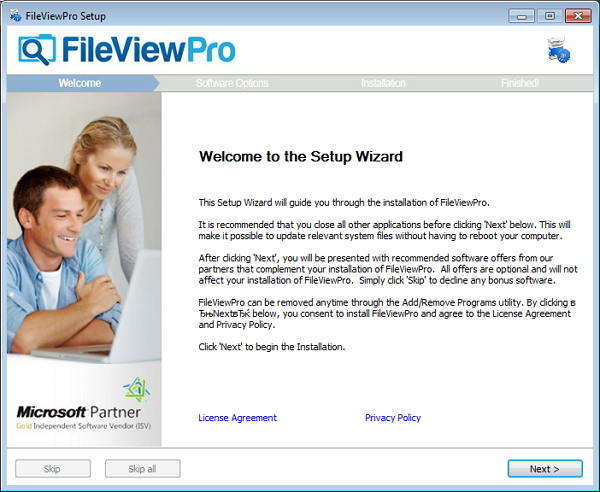
The variety of archive extensions can easily become confusing if you try to match each one with a separate application. Instead of guessing which program to use, you can rely on FileViewPro to identify and open the archive for you. With one consistent workflow for many different formats, FileViewPro reduces the risk of errors and saves time when handling compressed archives. Whether you are a casual user, a power user, or somewhere in between, tools like FileViewPro take the complexity out of dealing with compressed files so you can focus on the content rather than the format.
Looking ahead, compressed files will continue to adapt as storage devices, networks, and user expectations evolve. Ongoing research aims to squeeze more out of data while still keeping compression and decompression fast enough for real-time applications. Despite all the innovation, the core goal has not changed; it is still about making big things smaller and more manageable. Whether you are emailing a handful of photos, archiving years of work, distributing software, or backing up business systems, compressed files continue to do the heavy lifting in the background. By pairing advanced compression formats with an accessible viewer like FileViewPro, the benefits of smaller, smarter files become available to every user, not just technical experts.
- 이전글 The 10 Most Popular Pinterest Profiles To Keep Track Of Window Specialist
- 다음글 Play Exciting Slot Games free of cost Online in Thailand
댓글목록 0
등록된 댓글이 없습니다.